Microsoft Press 2010
Microsoft SharePoint 2010 Plain & Simple
With Chris Beckett
ISBN 978-0-7356-4228-7
Section 00 — Entrance
The problem
Most AI projects don’t fail for technical reasons.
I have spent decades learning how technology succeeds and fails inside real organizations. I now apply those lessons to AI automation, systems thinking, and teaching others how to build well.
01 Practice
I start every engagement in the same place: what has to be true when this is finished. Not which platform, not which model — what the organization must be able to do that it cannot do today. The technology is chosen last, because it is the least interesting decision.
I do not start with the tool. I start with the outcome.
Three decades of watching systems succeed and fail taught me that the hard part is never the installation. It is the people who have to use the thing on a Tuesday, the data that is messier than the demo, the exception nobody scoped, the budget, the security review, the politics. A design that has not survived contact with any of that is a proposal, not a system.
This is why I give automations the authority they need and not a step more. Agents prepare; people decide where the consequences are real; approved workflows act. Bounding authority is not timidity about the technology — it is what makes the technology safe enough to trust with something that matters.
An automation is not successful because it runs. It is successful because the organization can trust it.
The measure I care about is whether the organization is stronger after the system arrives than it was before — more capable, not more dependent. That is also why I teach. A system I leave behind should outlive my involvement in it.
02 The Long Gallery
Five eras. Open one to see what it taught me.
01
Learning that technology exists to support a mission.
What it taught me
What this era taught me
Systems are not abstractions when people depend on them. Reliability, communication, procedure and accountability come before novelty.
02
Moving from individual problems to interconnected systems.
What it taught me
What this era taught me
A system looks very different to the person who has to keep it running than to the person who designed it. Maintainability is not a courtesy — it is the job.
Desktop environments, infrastructure, enterprise systems, troubleshooting, deployment, operations and user support.
03
Connecting technology to business requirements.
What it taught me
What this era taught me
Clients rarely need the technology they ask for. They need the outcome they believe that technology will produce. The work is discovering the difference.
Enterprise, government, defense, education and other regulated environments — SharePoint, collaboration platforms, CRM, application development, systems integration and compliance-aware delivery.
04
Becoming responsible for organizations, teams, adoption and outcomes — not merely systems.
What it taught me
What this era taught me
The hard part of enterprise technology is rarely installing the software. It is aligning people, process, incentives, data and systems well enough for the change to last.
05
Returning to hands-on creation with three decades of accumulated context.
What it taught me
What this era taught me
AI changes what can be built and how quickly. It does not repeal the lessons of architecture, operations, governance, testing or human behaviour.
01 05
03 Selected Works
Curated, not collected. Open one for the lesson it left; the full exhibit answers all four questions.
01
A private operational command center where agents prepare, a human decides, and only approved workflows act.
What I learned
Agents prepare. Johnathan decides. Approved workflows act.
What I learned
Constraint is a design decision, not a limitation. An agent should have the authority it needs to be useful — not unlimited authority simply because the technology permits it.
Private repository
02
A developer-focused Bible data platform giving applications and automations structured, predictable scripture access.
What I learned
What I learned
A platform earns adoption through predictability, not features. The most valuable thing an API can offer other builders is the confidence that it will behave the same way tomorrow.
Private repository
03
A secure self-hosted automation stack a small team can actually run without a platform vendor.
What I learned
What I learned
Self-hosting is not a cost decision, it is an operational commitment. The honest question is not whether you can stand it up, but whether you can keep it running.
Private repository
04
The site you are reading — built with AI assistance under constraints strict enough that the build fails rather than ships something hollow.
What I learned
A gate that never fails is decoration.
What I learned
AI assistance is only as good as what is allowed to fail. Given no constraints it produces something plausible. Given constraints that reject work automatically, it produces something that had to earn its place. The judgment is in what you refuse to ship, not in how much you can generate.
Astro Updated August 2026
05
An AI assistant for drafting and checking scripture study material in low-resource languages.
What I learned
What I learned
Aim AI at a problem narrow enough to evaluate. A constrained tool whose output can be checked is worth more than a general one whose output cannot.
Python Updated July 2026
06
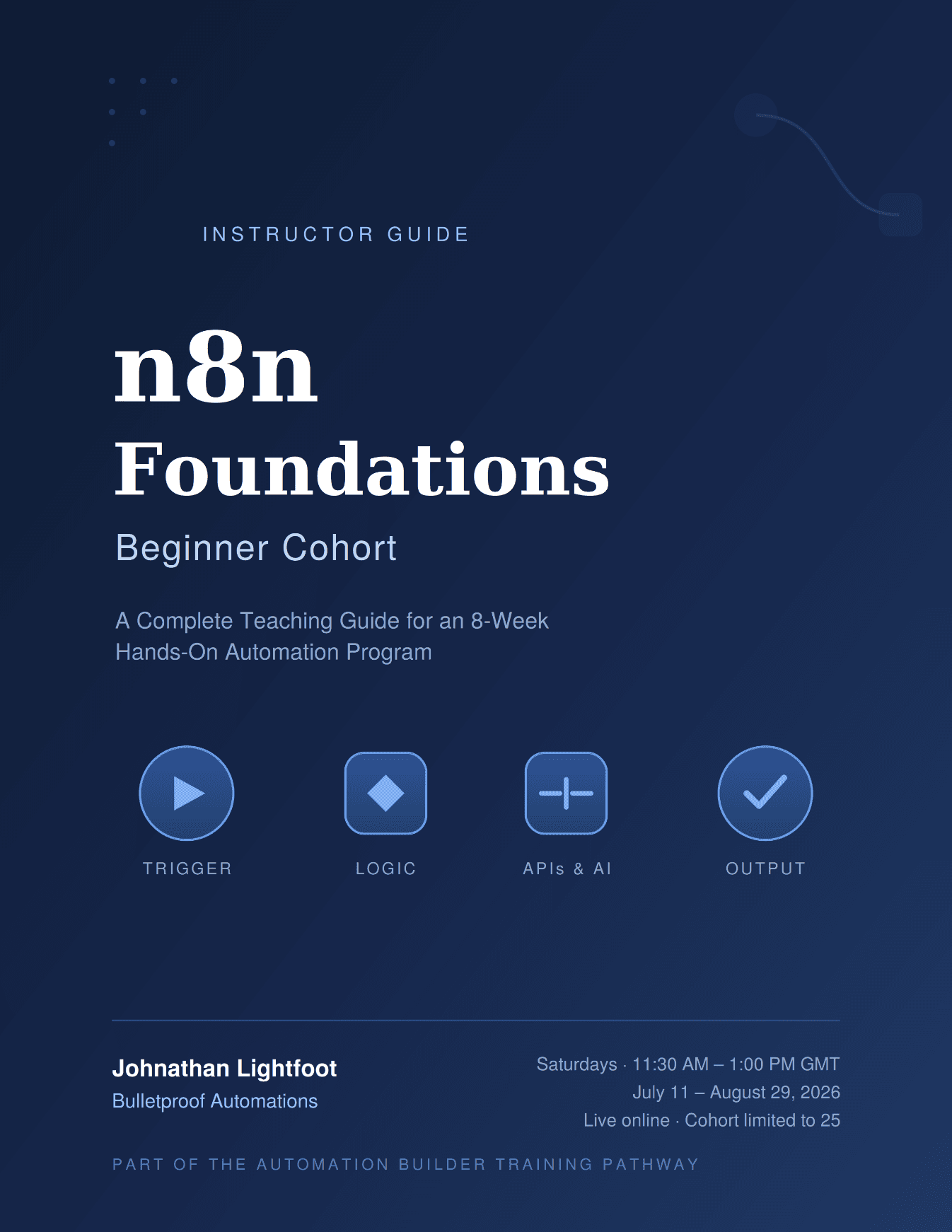
n8n Foundations — teaching automation as an engineering discipline rather than a library of copied templates.
What I learned
What I learned
Teaching exposes gaps that building alone can hide. If I cannot explain why a system works, I probably do not understand it as well as I think I do.
HTML Updated July 2026
01 06
04 Teaching & Community
I do not only build systems. I build the people who will build the next ones.
I teach automation as a working discipline.
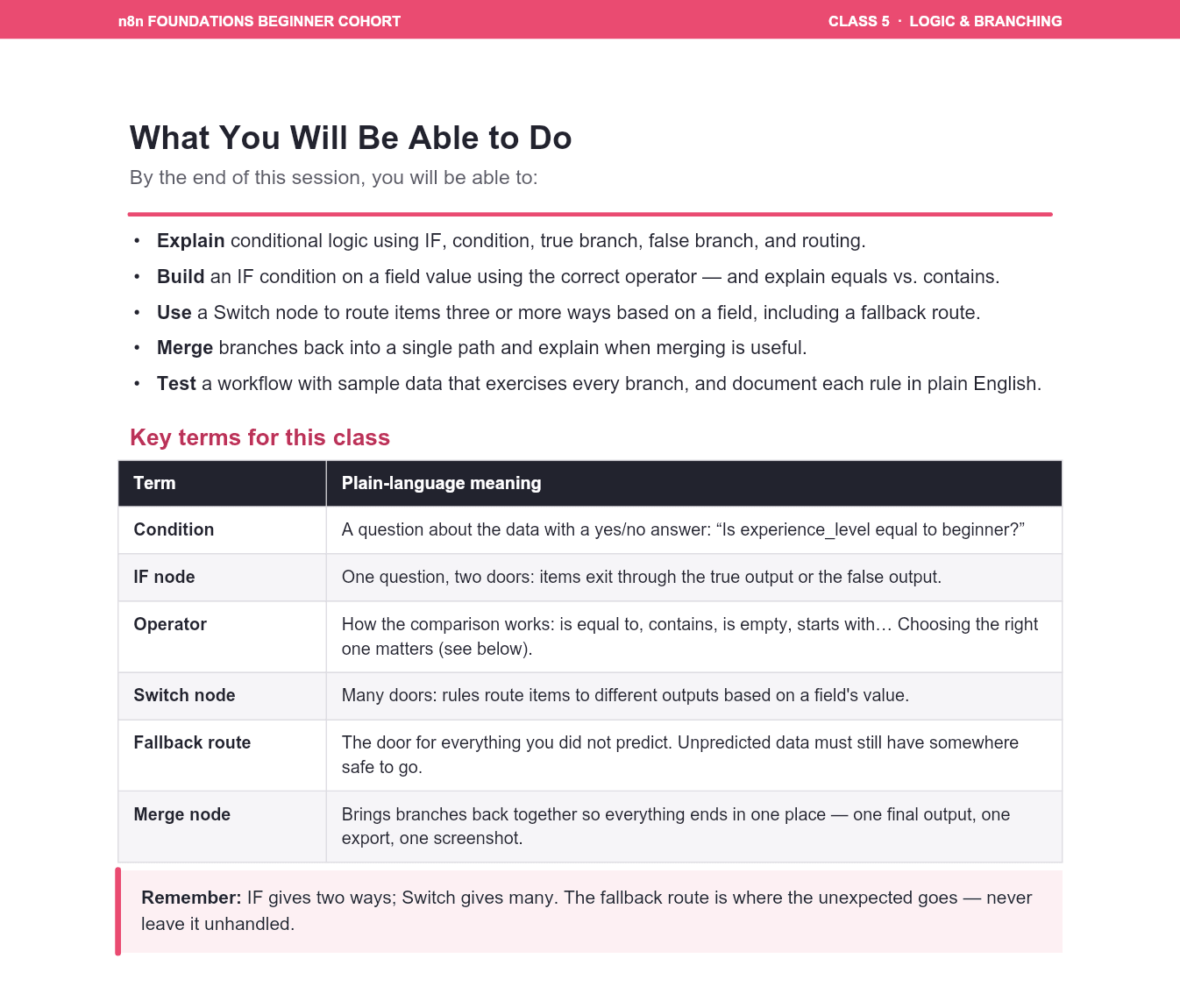
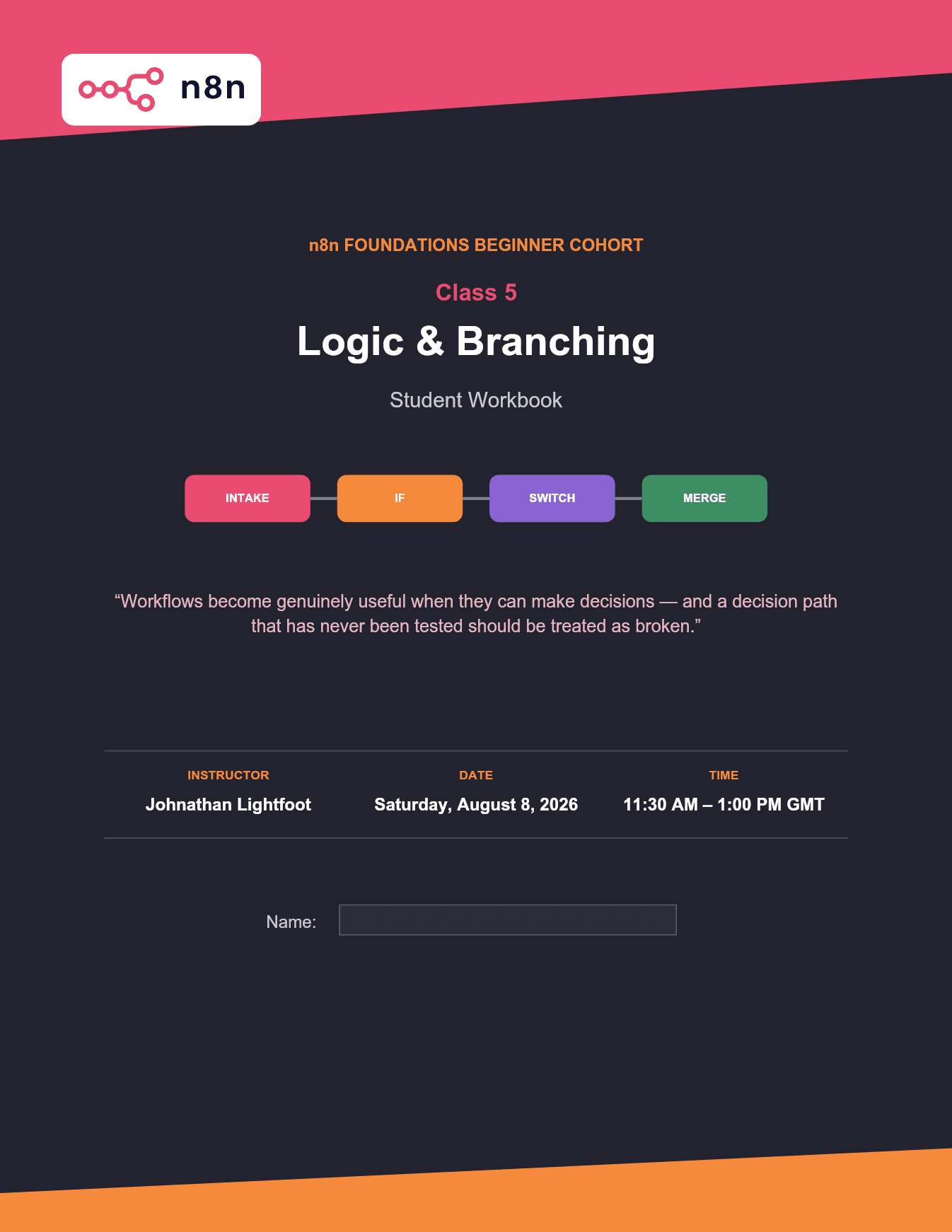
The method is outcome-first: determine the result that must be achieved, then work backward to the workflow, the tools, the controls and the skills required. The emphasis is on understanding why a workflow works rather than reproducing an example that happens to run — because a student who cannot explain a workflow is not ready to maintain it.
01 03
01
Direct instruction — cohorts, curriculum, workshops.
4 entries
02
Tools and resources that let other people build without him.
5 entries
03
Public thinking.
3 entries
01 03
Microsoft Press 2010
With Chris Beckett
ISBN 978-0-7356-4228-7
Microsoft Press 2011
Contributor, with Errin O’Connor · Penelope Coventry · Troy Lanphier · Michael Doyle · Thomas Resing
ISBN 978-0-7356-2724-6
Microsoft Press 2013
With Michelle Lopez · Scott Metker
ISBN 978-0-7356-6700-6
01 03
The systems I have seen do real damage were not badly built. They were correctly built and given more room than anyone had thought carefully about.
Field note — Why AI Implementations Fail
I keep some time for people earlier in their careers. If that is you, write to me. johnathan@bulletproofautomations.com